
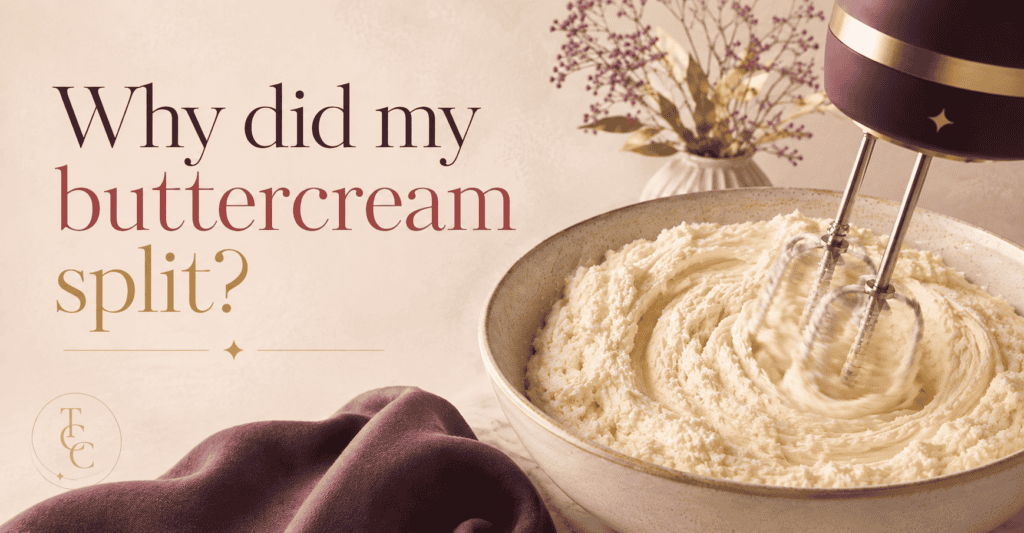
Split buttercream? Nightmare, right! Your buttercream’s gone from smooth and silky to a curdled, greasy mess, and your first instinct is probably to bin the whole bowl and start again.
Don’t! In almost every case, we can fix it – and it’s usually a simple temperature problem. Keep mixing on medium speed for 3–5 minutes first. If that doesn’t bring it back, gently warm the outside of the bowl with a warm, wet kitchen towel for 10–15 seconds and mix again. Now, read on for more on how to save it, why it happened, and how to stop it happening next time.
Just a note that this guide’s all about classic American buttercream (butter and icing sugar) – if you’re working with Swiss or Italian meringue buttercream, the causes and fixes are a bit different, and I’ll cover those separately.
Why Buttercream Splits in the First Place
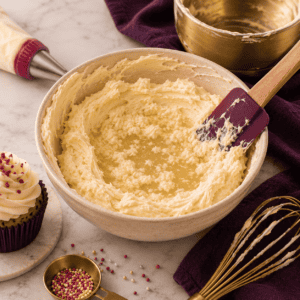
Buttercream is an emulsion – fat and sugar held together in one smooth, stable mixture. When that structure breaks, you get all the classic warning signs: a curdled, lumpy texture, or a greasy, separated look where the butter seems to be pulling away from everything else.
“It’s a temperature problem” is the textbook answer, and it’s usually right – but after years of making buttercream commercially, I can tell you it’s rarely just one thing. It’s normally one of these:
- The butter was too cold to start with. If it’s still a bit firm rather than properly softened, your butter won’t incorporate smoothly, and the whole thing never comes together properly in the first place.
- A liquid went in too cold, or too fast. Milk or cream straight from the fridge or even a splash of flavouring can shock your mixture – especially if it’s dumped in all at once instead of gradually.
- Your kitchen’s just cold. This one catches people out more than you’d think, especially in winter. A chilly worktop or cold mixing bowl can drop the butter’s temperature mid-mix without you even noticing.
- A heavy hand with liquid extracts. Vanilla and other extracts are mostly alcohol and water – too much, added too fast, or at the wrong time can do exactly the same damage as cold milk.
Side Note!
Here’s the bit most guides skip: there’s a real difference between “split” and “not finished yet.” Buttercream can look a bit curdled partway through mixing before it fully comes together, and that’s completely normal. Baking is messy and doesn’t always look pretty along the way! Proper split buttercream looks greasy, slightly wet, or visibly separated even after a good few minutes of solid mixing. If you’re only a minute in and it looks rough, don’t panic and tip it out – keep going.
How to Fix It
- Keep mixing – even longer than feels right. This is where most people give up too early. Put your mixer back on medium and let it run for a full 3–5 minutes. Buttercream tends to look its absolute worst right before it comes back together, so resist the urge to give up on it too soon.
- Still not right? We need some gentle heat. Take the bowl off the stand (or hold your handheld mixer’s bowl) and warm the outside of it – hands, a warm damp cloth wrapped around the bowl, or a hairdryer on a low setting held a short distance away for 10–15 seconds. You’re just taking the chill off, not melting anything. Then mix again.
- Repeat in short bursts if needed. Still stubborn? Alternate short blasts of gentle warmth with a minute of mixing, checking as you go. You’re very slightly softening the butter that’s causing the problem, without overheating the whole batch.
- Nothing working? Check your ratios. Sometimes what looks like splitting is actually just too much liquid for the amount of butter and sugar. If it’s genuinely too thin and greasy rather than curdled, we can fix that too: add a little extra sieved icing sugar, a spoonful at a time, mixing well between each bit, until it firms back up.
If your buttercream’s got other problems and turned out too thin rather than curdled, check out Why Is My Buttercream Too Runny? instead
How to Stop It Happening Next Time
- Take your butter out of the fridge properly in advance – it’ll need a couple of hours to warm up completely. Don’t settle for just “slightly less cold”.
- Add your flavouring with your butter. Add it half way through the butter-whipping stage, before you even think about icing sugar. If you get it combined nicely now, it’ll avoid curdling later.
- Skip the liquid! I’ve never had a batch of buttercream need milk, cream or any liquid to loosen it up. It just needs more whipping. Set that mixer on the go and leave it for 10 minutes. Yes, 10! Great buttercream takes longer than you think.
- If your kitchen’s cold, warm your mixing bowl slightly before you start (a quick rinse in warm water, then dry it). No point in letting your butter warm up nicely if you’re then just going to shock it in a cold bowl.
I’m sure some of this advice is different to others, but I’ve spent over 6 years making cakes and collecting hundreds of 5* reviews with these methods. They’re probably not the only way to do it, but it’s the way that’s worked for me and I wanted to share it with you all to see if I can help. Give these tips a try and let me know what you think!
Frequently Asked Questions
Can I still use split buttercream?
Once it’s properly fixed and smooth again, yes – completely fine to use. If it’s still visibly separated after a few tries, it’s better to start again rather than risk it, especially for anything structural like a crumb coat or piping.
Does split buttercream taste different?
No, splitting is a texture and structure issue, not a flavour one. Fixed buttercream tastes exactly the same as it would have done otherwise.
Why does this happen more in winter?
Colder kitchens mean your butter, bowl, and any added liquids all start from a lower temperature. This makes the emulsion more prone to splitting. Factor in a bit of extra time for buttercream in winter, both for properly softening your butter and for rescuing it if it does split.